Persian Voices:
Between Words
and Worlds
A living poet in a room built for living literature.
The circle returned to Farsi. This time with a living poet in the room.
Six months after the circle first gathered around Iranian women poets, it returned to the Farsi tradition. The difference this time was presence. Not the presence of historical voices, as essential as those are, but the presence of a poet who could speak back. Who could be asked: what did you mean by this? Where did it come from? What did it cost to write it?
Nazanin Aygani brought three original works to Kensington Row Bookshop. She read each in Farsi. She read each in English. She then opened the room to conversation. The exchange that followed was the kind that gatherings like this one exist to make possible: a living dialogue between a poet and the people who received her work, across the distance of language and the closeness of attention.
Farsi is one of the oldest literary languages in the world. Its poetic tradition stretches back more than a thousand years, through Rumi, Hafez, and Omar Khayyam, through the lyric and the ghazal and the rubaiyat. When Nazanin writes in Farsi, she carries all of that lineage alongside her own contemporary voice. When she translates into English, something crosses over and something remains on the other side. The afternoon was about sitting with both.
This was also the first gathering at Kensington Row Bookshop. A bookshop holds what a studio makes. The circle found its second home.
The poem that arrives in the poet's own voice carries something no translation can replicate. It carries the breath of the person who made it.
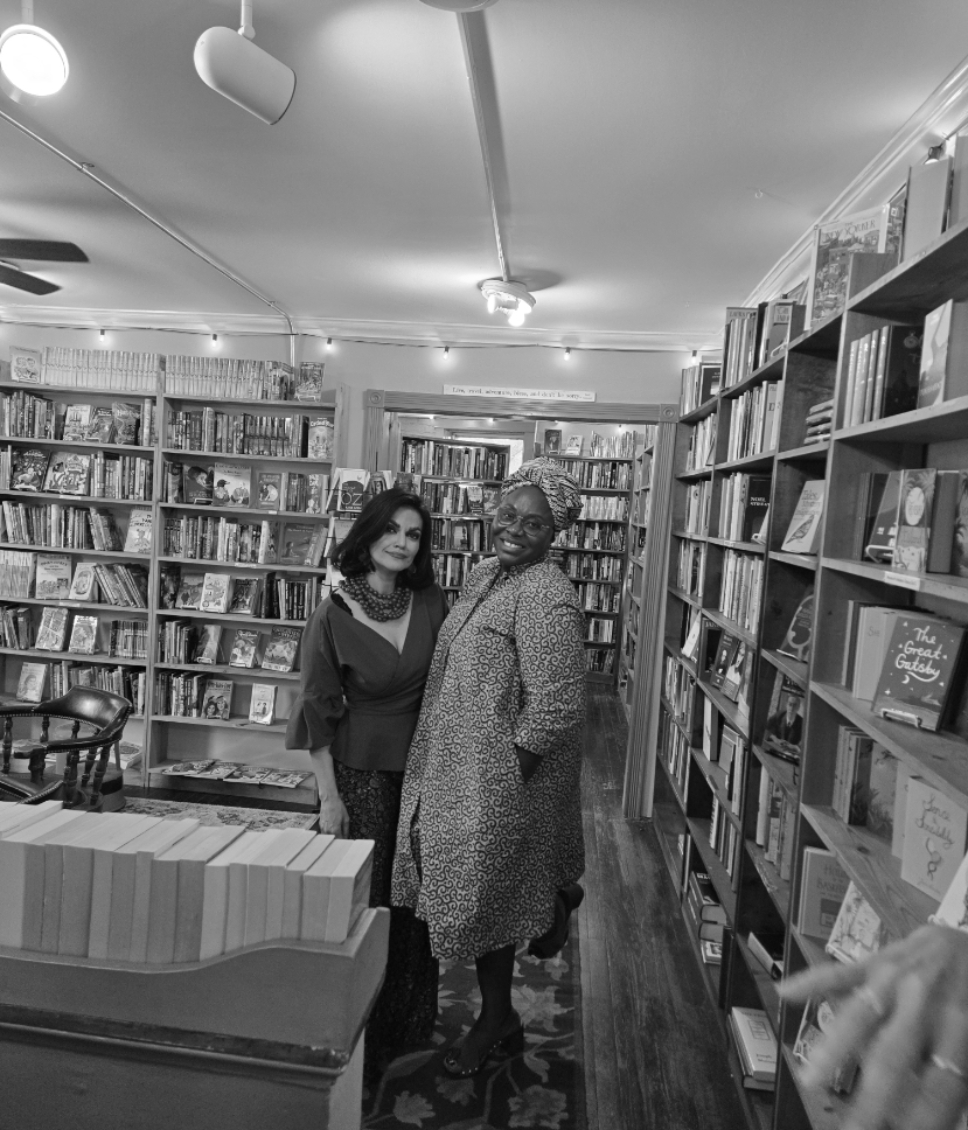
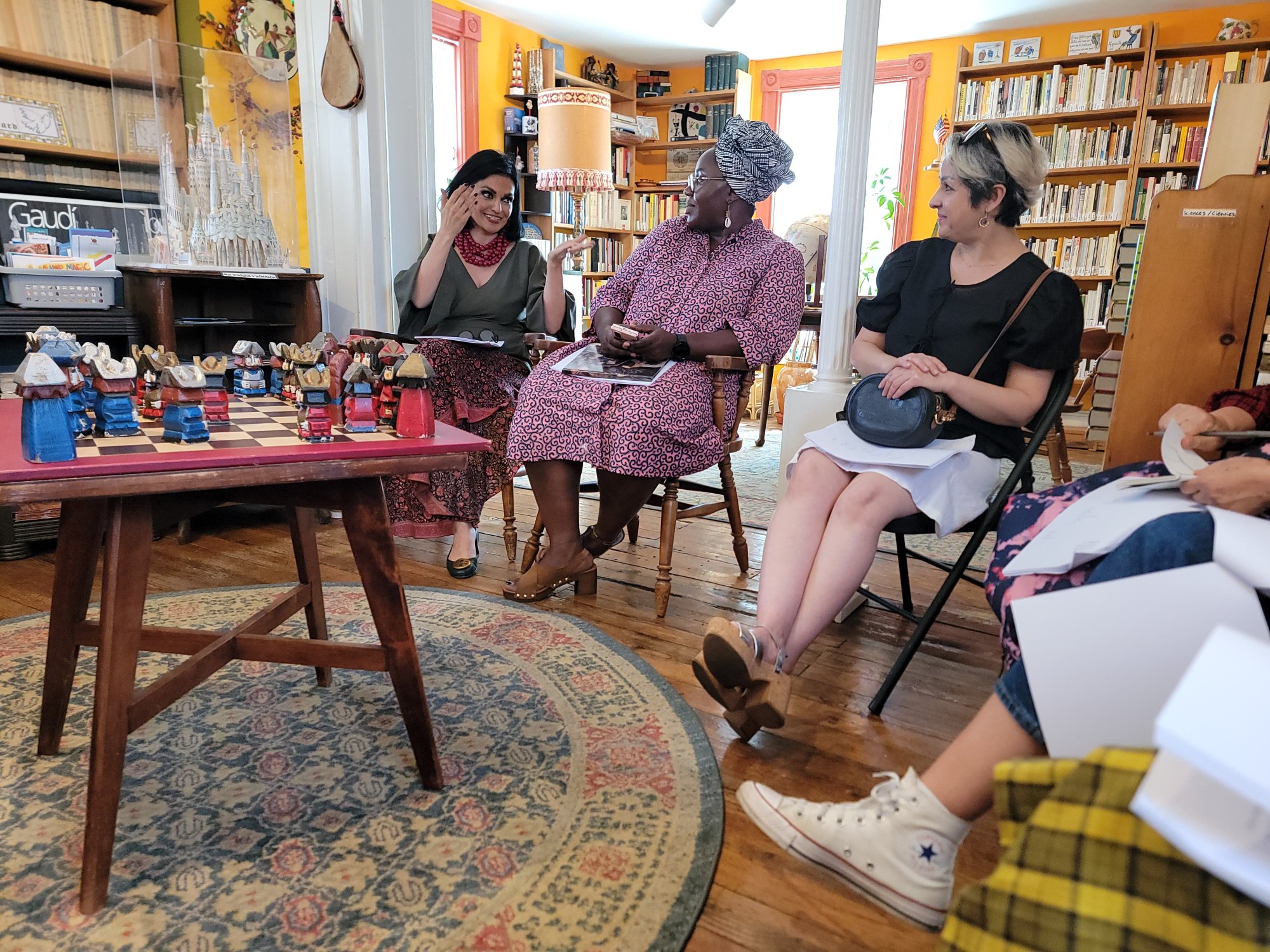
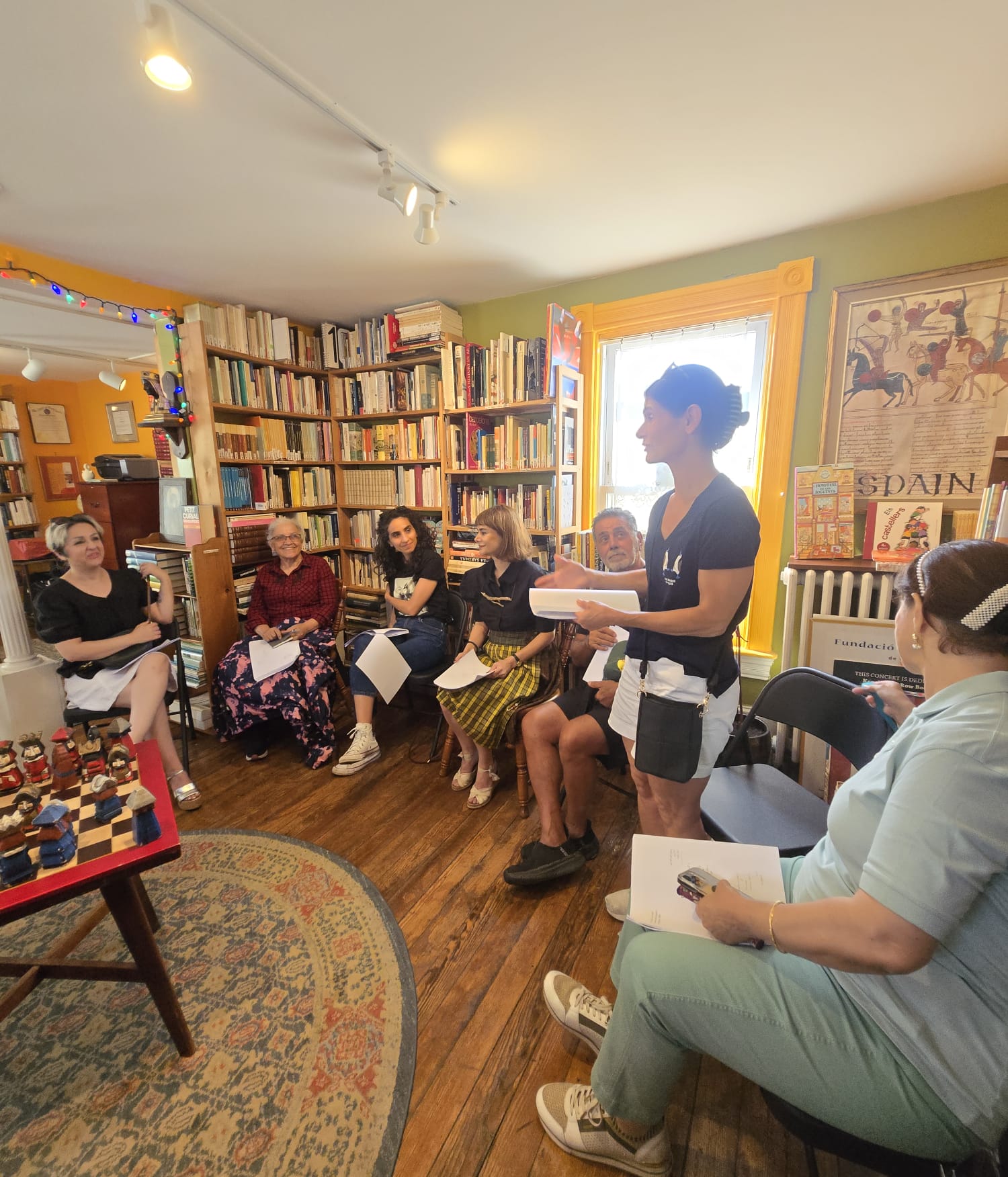
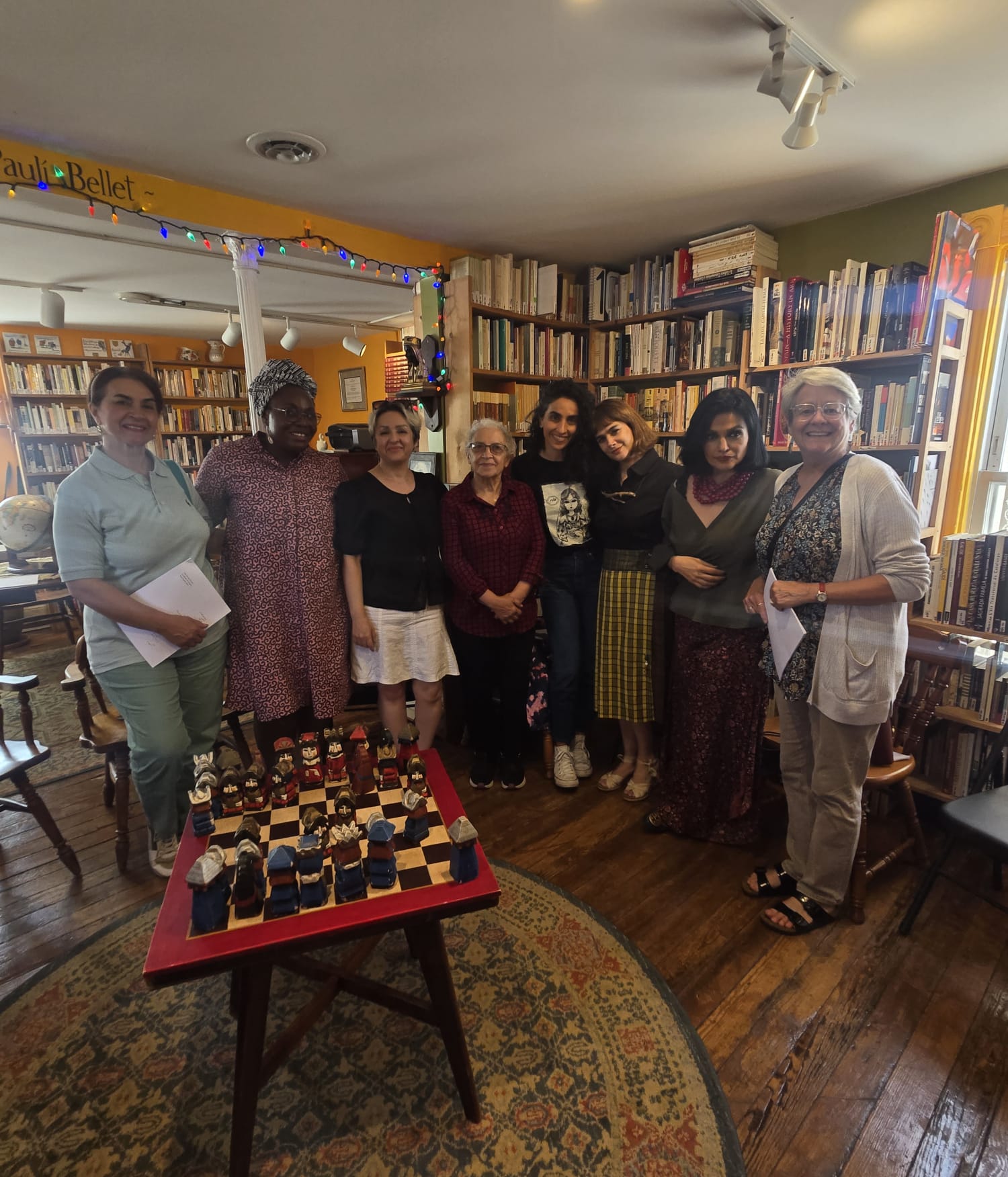
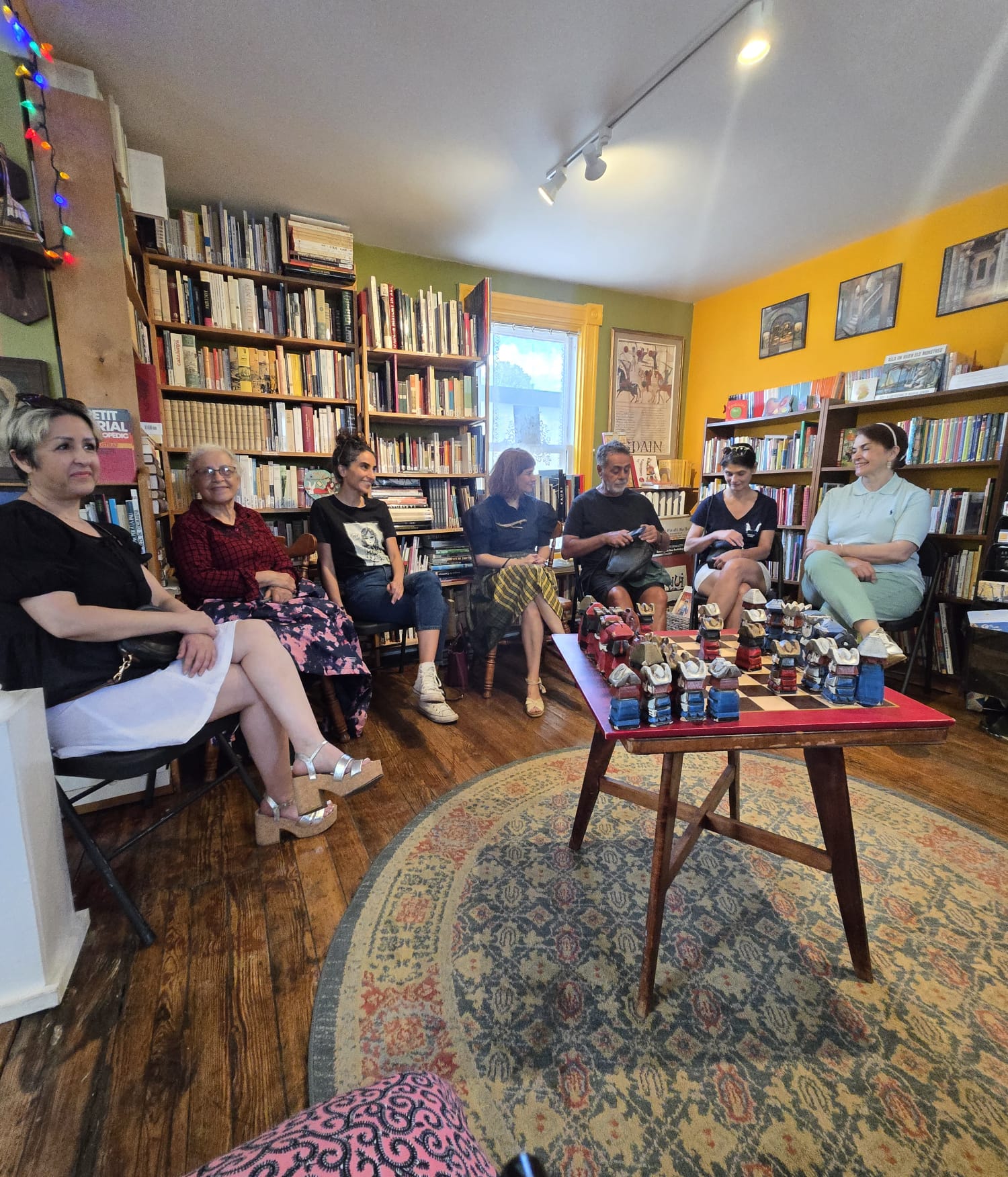
The founder of MuseVerse Circle brought this gathering back to the Farsi tradition with a deliberate choice: rather than return to the historical archive, she invited a living poet into the room.
A poet and cultural voice whose work moves between Farsi and English with the confidence of someone who belongs to both. Her generosity in opening her creative process to the room gave this gathering its aliveness.
Connect with Nazanin on LinkedInMuseVerse Circle holds deep gratitude for Nazanin and for every poet who brings their living work into this room. The circle is most alive when the poet is still in the conversation.
A poet, writer, and cultural voice whose work moves between Farsi and English. She brought three original works to Kensington Row, reading each first in Farsi and then in English.
A poem built around a longing that has no name in the language of arrival.
// Nazanin Aygani · Original work · Shared with permission of the poetA poem about the geometry of longing, and what the body learns to hold when the heart cannot.
// Nazanin Aygani · Original work · Shared with permission of the poetA poem about the dreams that carry more truth than waking, and the responsibility of reporting them honestly.
// Nazanin Aygani · Original work · Shared with permission of the poetAll poems featured in MuseVerse Circle gatherings are sourced from the public domain, authorized educational translations, or used with the express permission of the poet or their estate.
The threads that ran through every poem.
What changes when the poet is in the room is everything. The poem is no longer fixed. It breathes. It answers questions.
Nazanin’s work moves between Farsi and English as a dual inhabitation. This position of betweenness is not a limitation. It is the precise location from which her poems see.
The three poems each approached the question of interiority from a different angle. Together they built a portrait of what the mind holds when the world outside is too large to contain.
What stayed with those who listened.
I had never heard a poet explain their own image in real time. It changes the poem completely.
Attendee reflection · September 28, 2025The Farsi landed in my chest before the English arrived in my mind. That is the point.
Attendee reflection · September 28, 2025Khotanay. I do not know that word. But I know that feeling now.
Attendee reflection · September 28, 2025A living poet is a different kind of witness than a historical one. Both matter. Both are needed.
Attendee reflection · September 28, 2025Those who made this possible.
Every poem that enters this room has traveled a long road to get here. It passed through the hands of translators who gave years of their lives to carrying meaning across languages without losing the soul of what was said. Through archivists who preserved what time and politics tried to erase. Through scholars and historians who gave context to what might otherwise arrive without roots.
MuseVerse Circle stands on all of that work. We are grateful to every person who has ever built a bridge between a poem and a reader who needed it.
This gathering is dedicated to the translators, the archivists, the educators, the historians, the curators, and the poets themselves. The people who keep language alive so the rest of us can find our way home in it.
The reading guide for this gathering.
Poet portraits, historical context, thematic threads, discussion prompts, and Joy-Jayne’s curatorial notes. Freely available to all.
Read the guide