Norwegian
Voices
Olav H. Hauge. Orchardist. Philosopher. Poet of the fjordland.
October in Norway is the turn toward the dark season. It is also when Olav Hauge's poetry makes its fullest sense.
Olav Hauge spent his entire life in Ulvik, a small village in the fjordland of western Norway, tending his apple orchard and writing poems of extraordinary philosophical depth. He was largely self-educated, reading Goethe and Rilke and Li Po and Emily Dickinson in the original languages while harvesting fruit and preparing the land for winter. His poems are spare, psalmlike, and rooted in the particular quality of Norwegian light and landscape. They have been compared to classical Chinese poetry in their restraint and their willingness to let meaning live in the spaces between words.
October was the right month to enter his world. The light retreating, the apple harvest in, the long Nordic evening settling over the fjords. Norwegian culture has always held a deep relationship with the season of inwardness, with the idea that darkness is productive rather than simply absent. The word for this sensibility lives in Norwegian poetry, which has long understood that the plainspoken and the profound are the same thing.
This gathering was also shaped by friendship. Steven Augustus and Joy-Jayne Bassey met in a poetry cohort, brought together by a shared love of music, language, and the written word. When the circle turned to Norwegian voices, Joy-Jayne knew exactly who to call. Steven had spent years studying Norwegian language and culture, had translated poems collaboratively, and had written an original Norwegian-style poem on a walk through the wooded forests of Bemidji, Minnesota, set to a melody he composed, with a translation and a counter-melody written alongside it. He brought all of that to the room.
Steven wrote in his essay for this gathering that feeling unworthy is how he knows he is doing the right thing, because it always gives way to raising something more than just himself up. Poems elevate us when we create them, and elevate us when we hear them, when we let them out. That is the spirit in which Hauge wrote. That is the spirit in which this gathering was held.
Listening to something just outside your understanding can be brought into harmony, especially when you collaborate. It is not necessary that everyone understands your vision of creation to add remarkable elements to it.
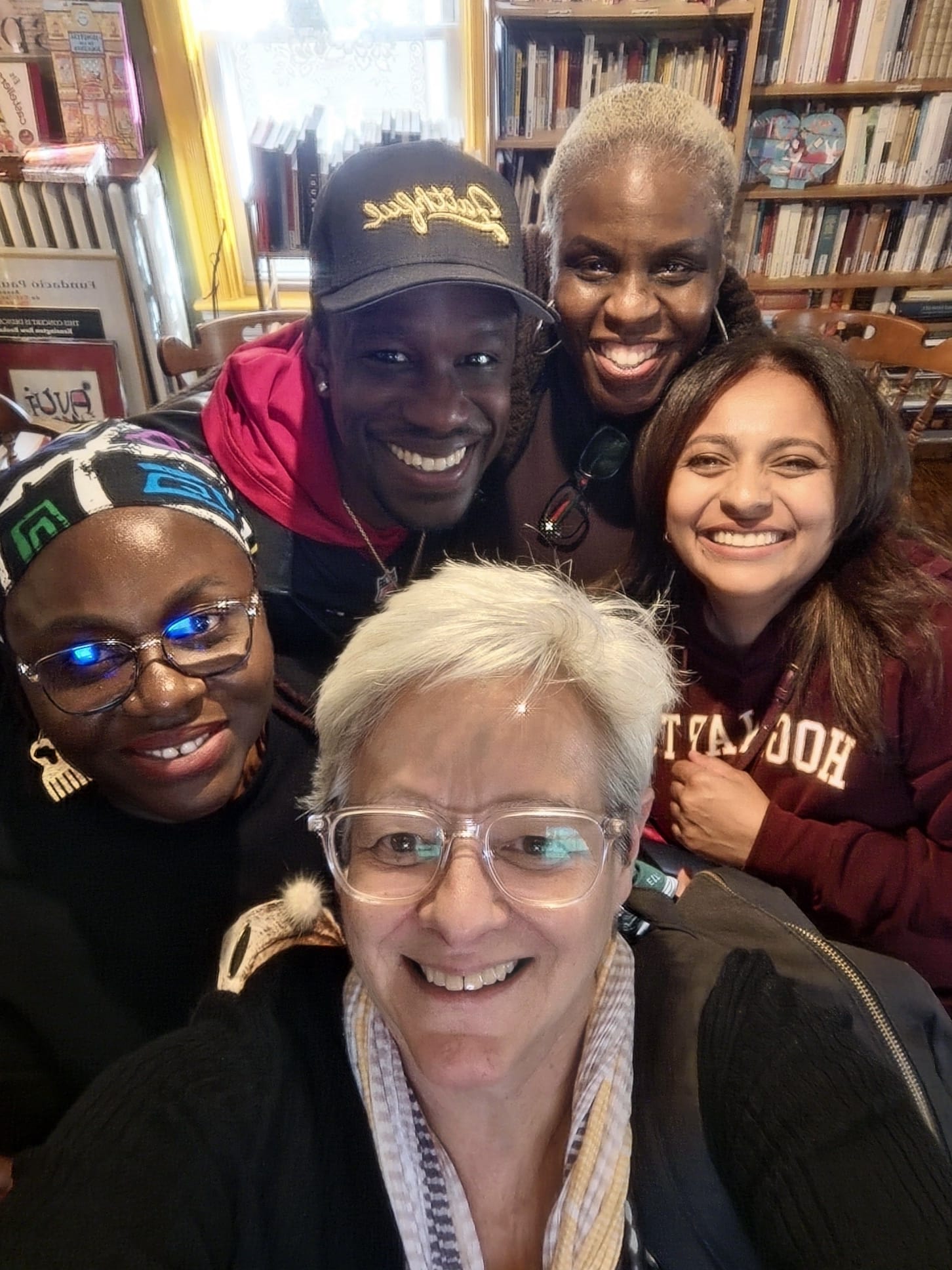
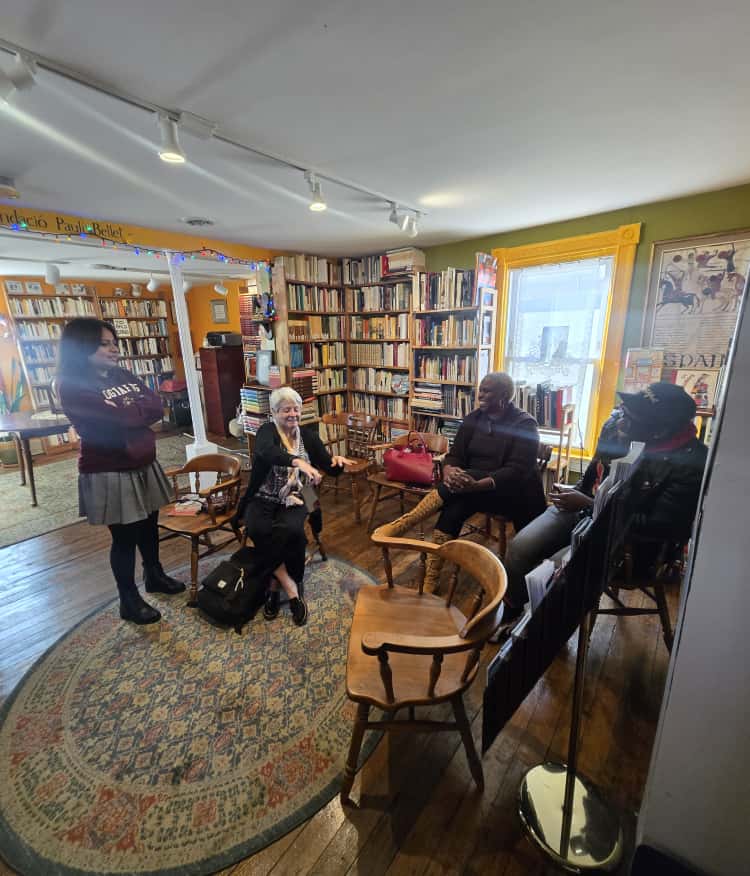
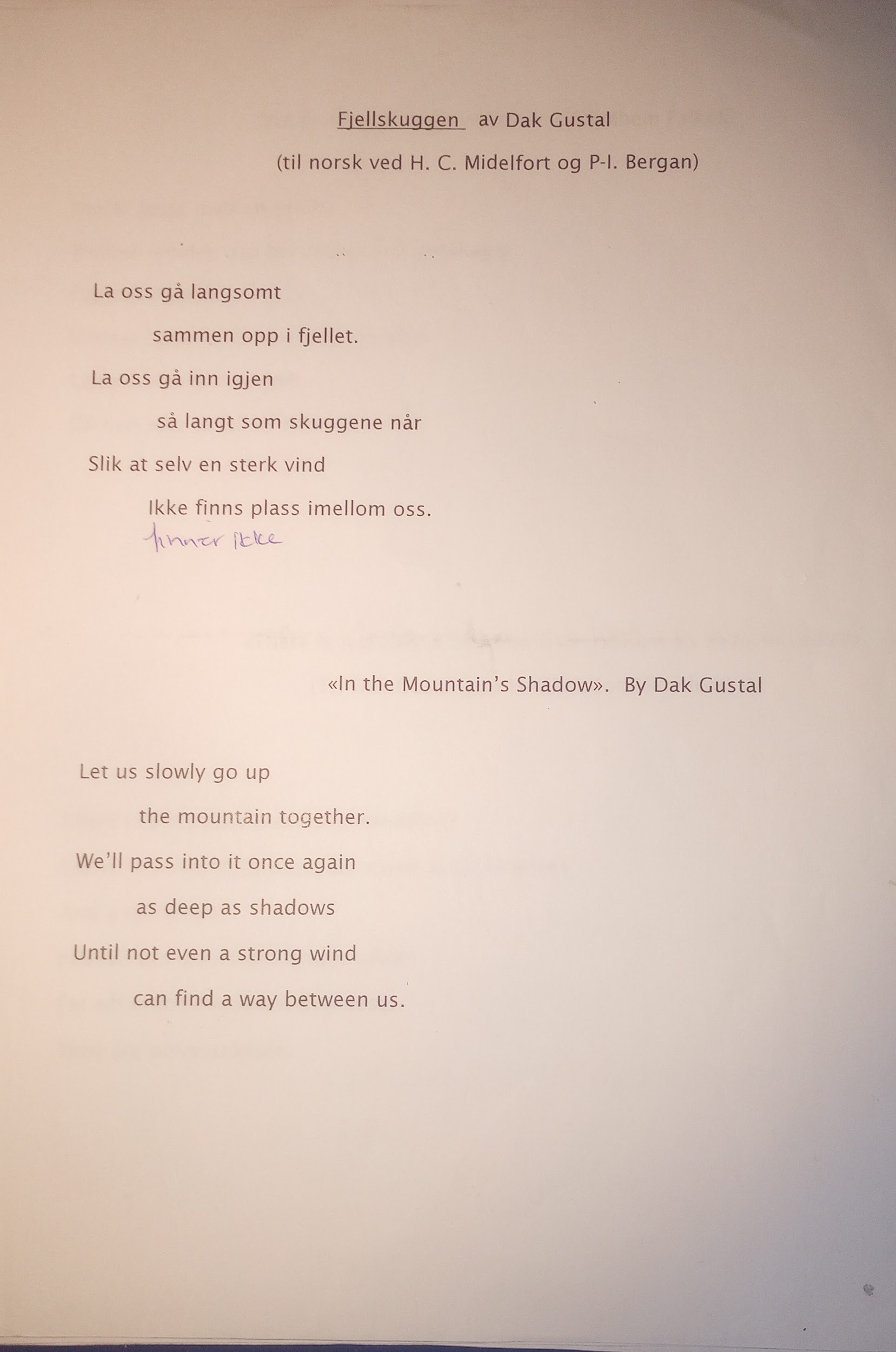
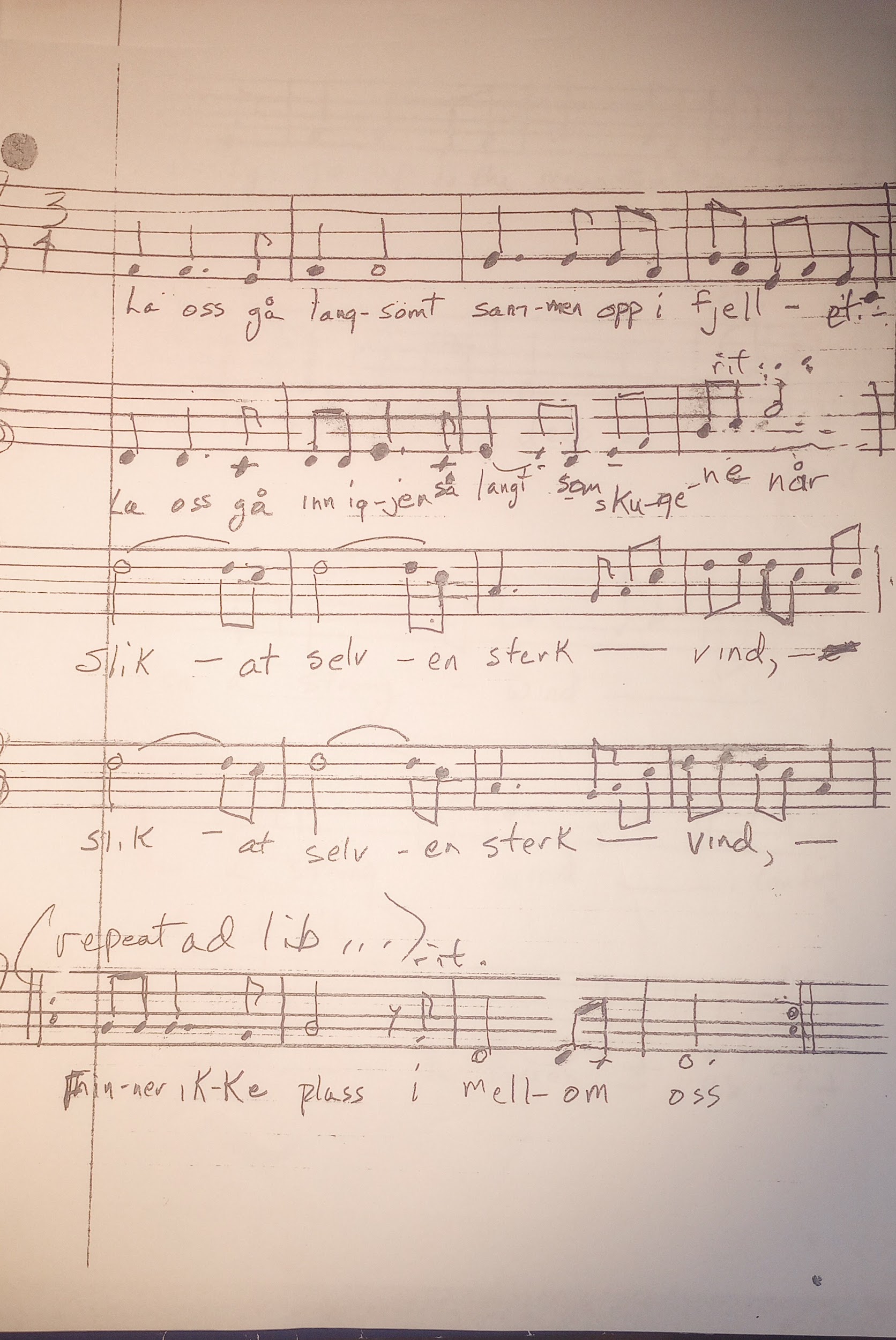
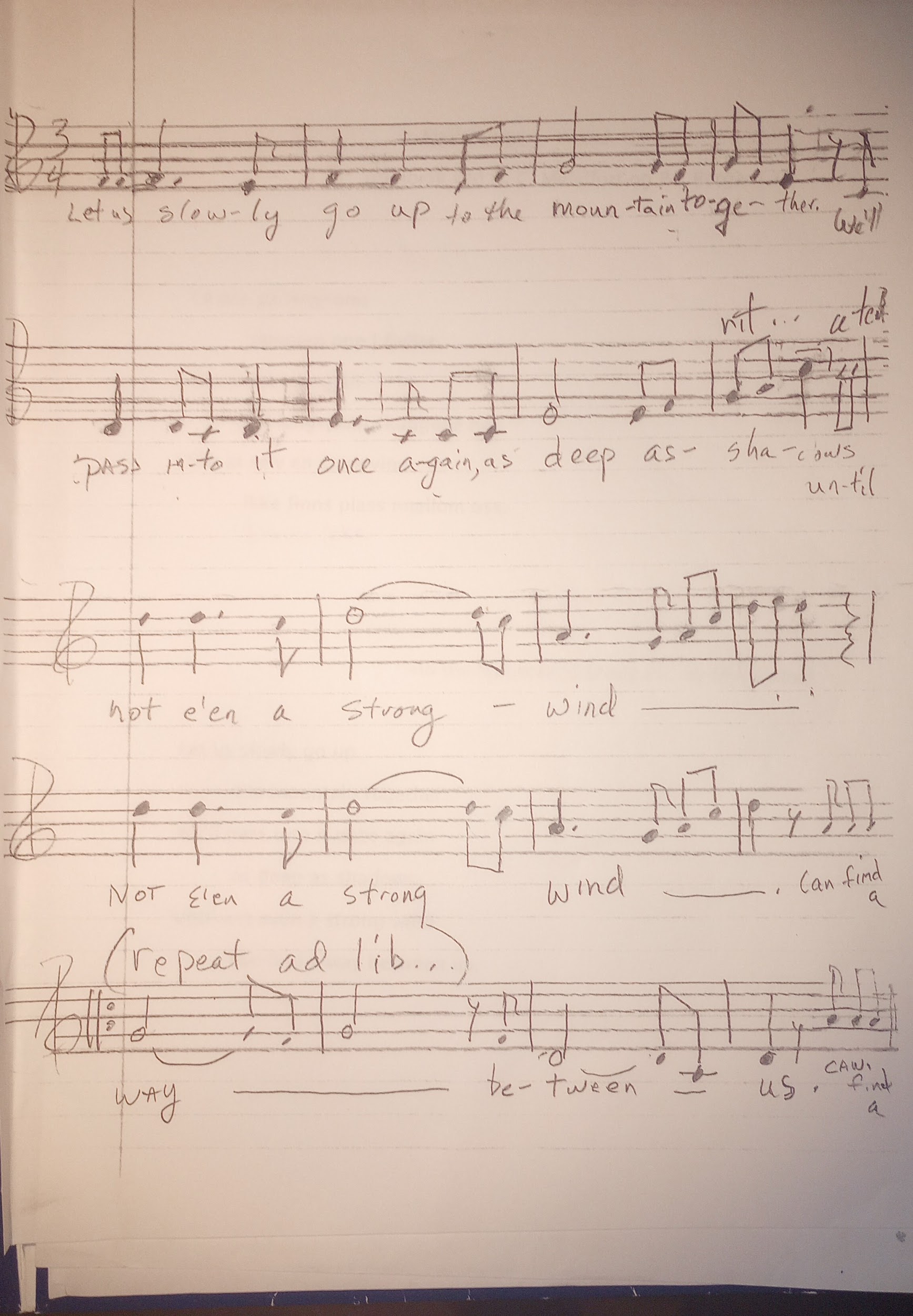
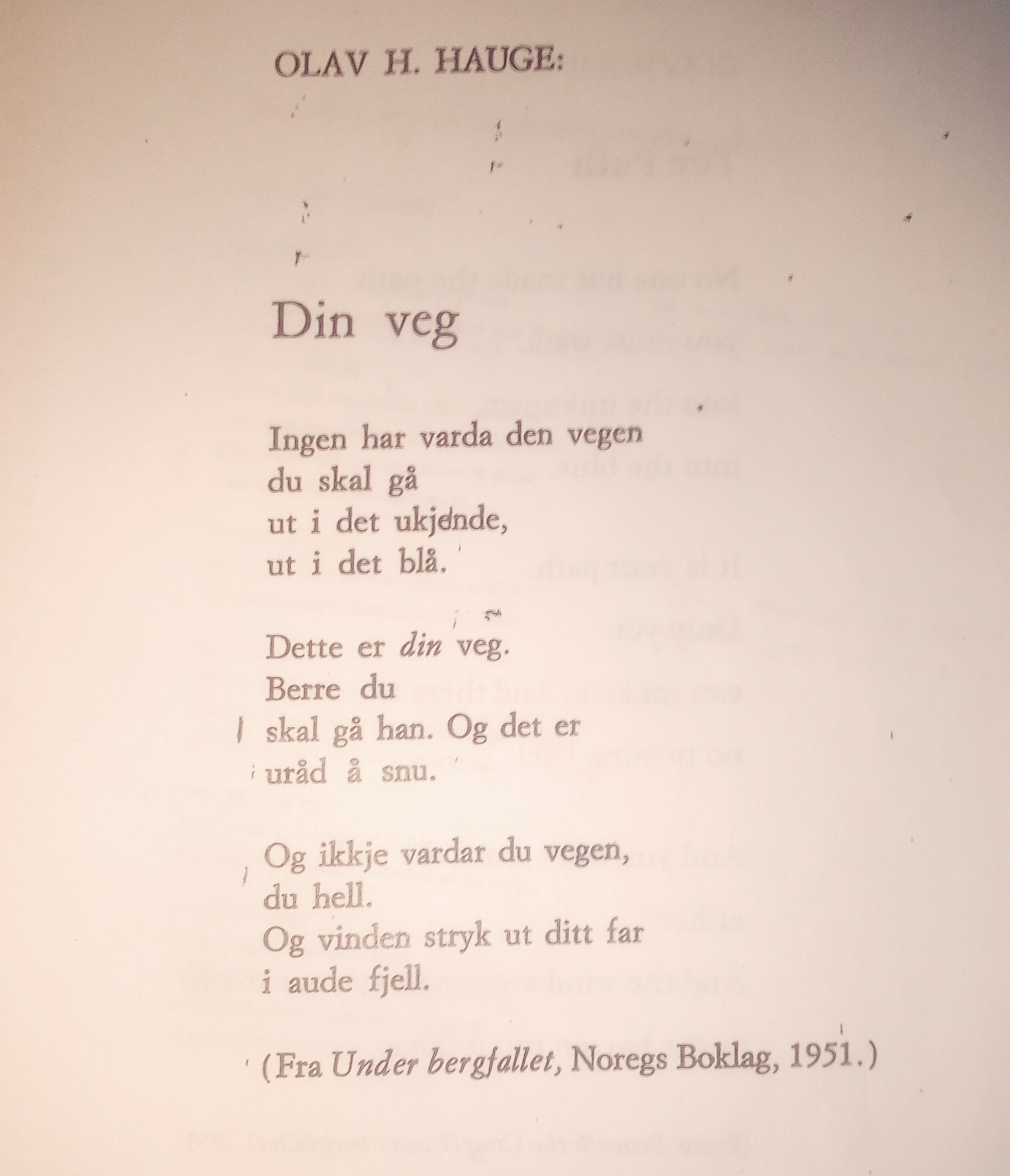
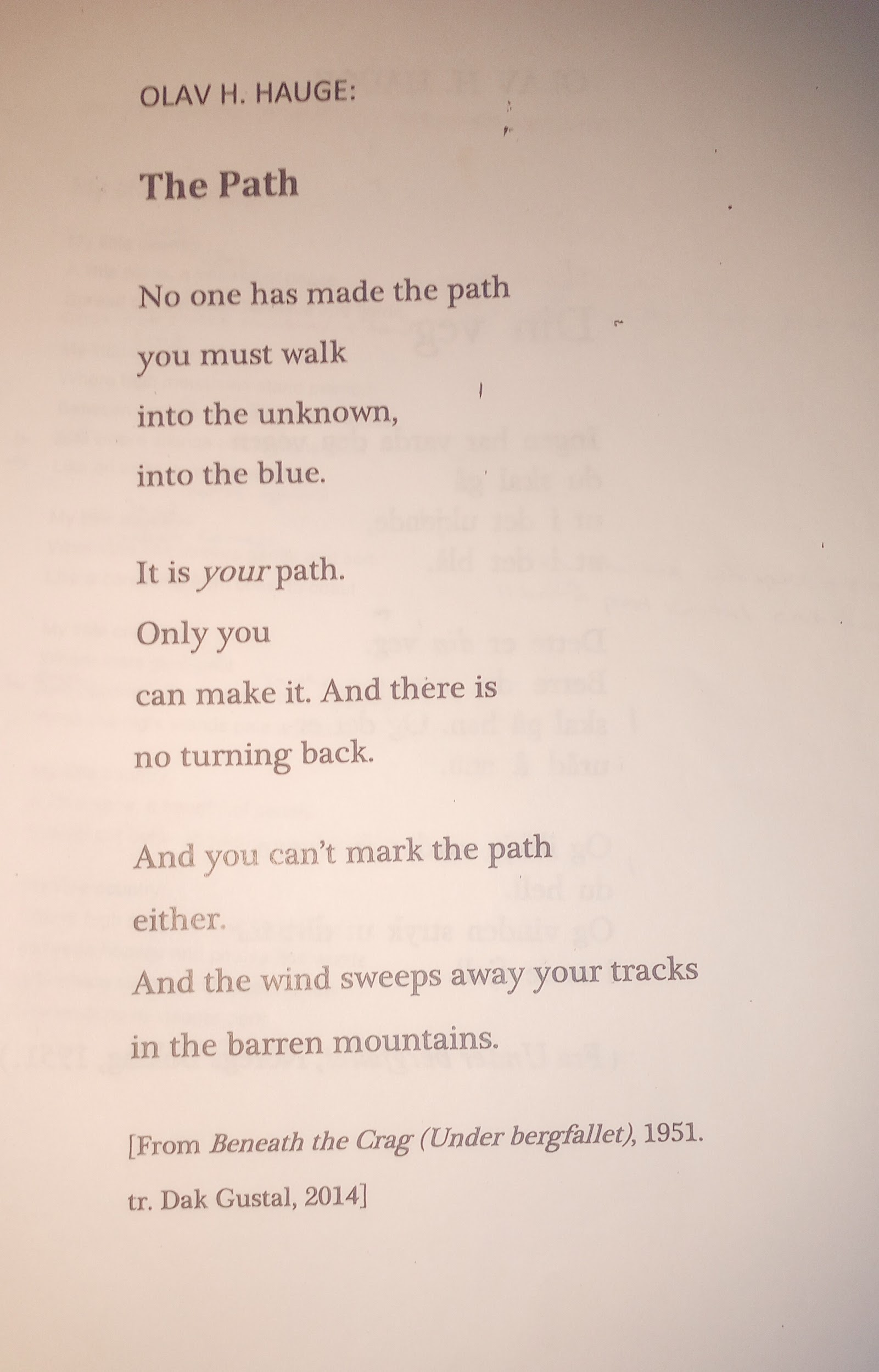
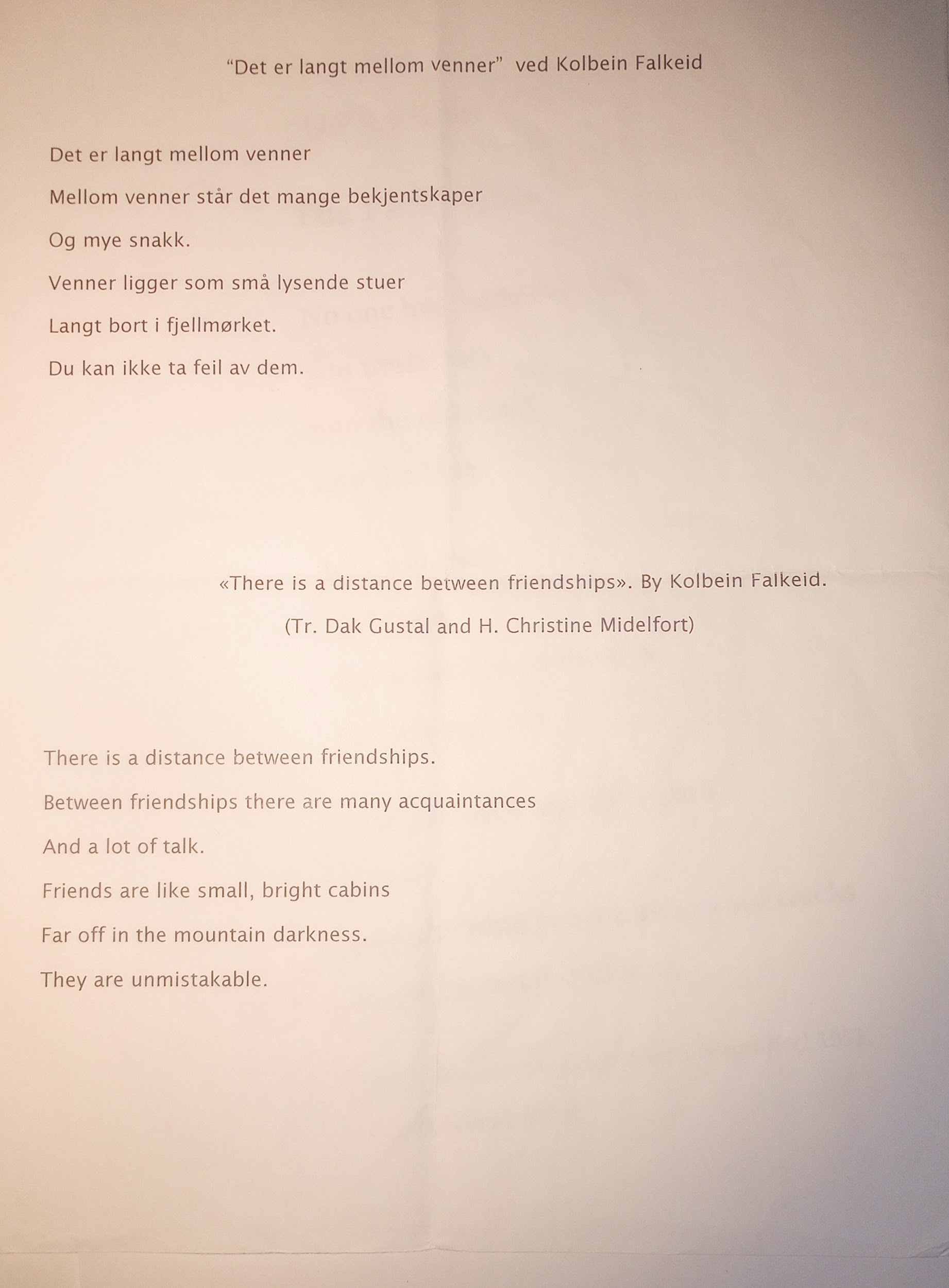

Joy-Jayne brought this gathering to Hauge after a sustained encounter with his work. She found in his poems something essential to what MuseVerse Circle holds: the particular as the doorway to the universal, the daily labor as the form of contemplation.

Steven brought the depth of his theological and poetic training to this gathering. His understanding of contemplation as a spiritual practice helped the room understand why a man who spent his life growing apples might also be one of the most important poets of the twentieth century.
MuseVerse Circle holds deep gratitude for Steven and for every guest who brings their full intellectual and spiritual formation to these rooms.
Hauge was born in Ulvik in the Hardanger region of western Norway, where he spent most of his life as an apple farmer. He was largely self-educated, learning several languages to read poets in the original: Pound, Celan, Trakl, Brecht. His work became known internationally through translations by Robert Bly and others.
Do not come to me with the entire truth. / Come with what you carry without breaking. Come with the small gift I can receive.
// Translated by Robert Bly and Robert Hedin · Public domain educational useRead moreIt is that dream we carry with us / that something wonderful will happen, / that it has to happen.
// Translated by Robert Bly and Robert Hedin · Public domain educational useRead moreAll poems featured in MuseVerse Circle gatherings are sourced from the public domain, authorized educational translations, or used with the express permission of the poet or their estate.
The threads that ran through every poem.
Hauge spent decades attending to particular things. His poems are the residue of that attention. They teach, by example, that the world reveals itself to those willing to look without expectation.
Hauge’s poems look simple. They are not. They achieve their depth through compression, through what is left out as much as what is put in.
This gathering was shaped by the friendship between Joy-Jayne and Steven. To share a poem with someone you trust changes what the poem is.
What stayed with those who listened.
Today, I was reminded why I should return to poetry.
Attendee reflection · October 26, 2025Hauge wrote from a fjord. I live in a suburb. And I understood every word.
Attendee reflection · October 26, 2025Do not come to me with the entire truth. I am still thinking about that line.
Attendee reflection · October 26, 2025This was the most grounding experience I have had in a long time.
Attendee reflection · October 26, 2025Those who made this possible.
Every poem that enters this room has traveled a long road to get here. It passed through the hands of translators who gave years of their lives to carrying meaning across languages without losing the soul of what was said. Through archivists who preserved what time and politics tried to erase. Through scholars and historians who gave context to what might otherwise arrive without roots.
MuseVerse Circle stands on all of that work. We are grateful to every person who has ever built a bridge between a poem and a reader who needed it.
This gathering is dedicated to the translators, the archivists, the educators, the historians, the curators, and the poets themselves. The people who keep language alive so the rest of us can find our way home in it.
The reading guide for this gathering.
Poet portraits, historical context, thematic threads, discussion prompts, and Joy-Jayne’s curatorial notes. Freely available to all.
Read the guide